
Her Wild Ways - Part VII
A 7-part series following a Modern Goddess-in-Training stumbling towards the Divine

“For thine is the kingdom, the power, and the glory forever, Amen” - Translated from the original Aramaic:
For the divine feminine creative principle, the power of life, and the radiance of all existence belong to you through all cycles of time.
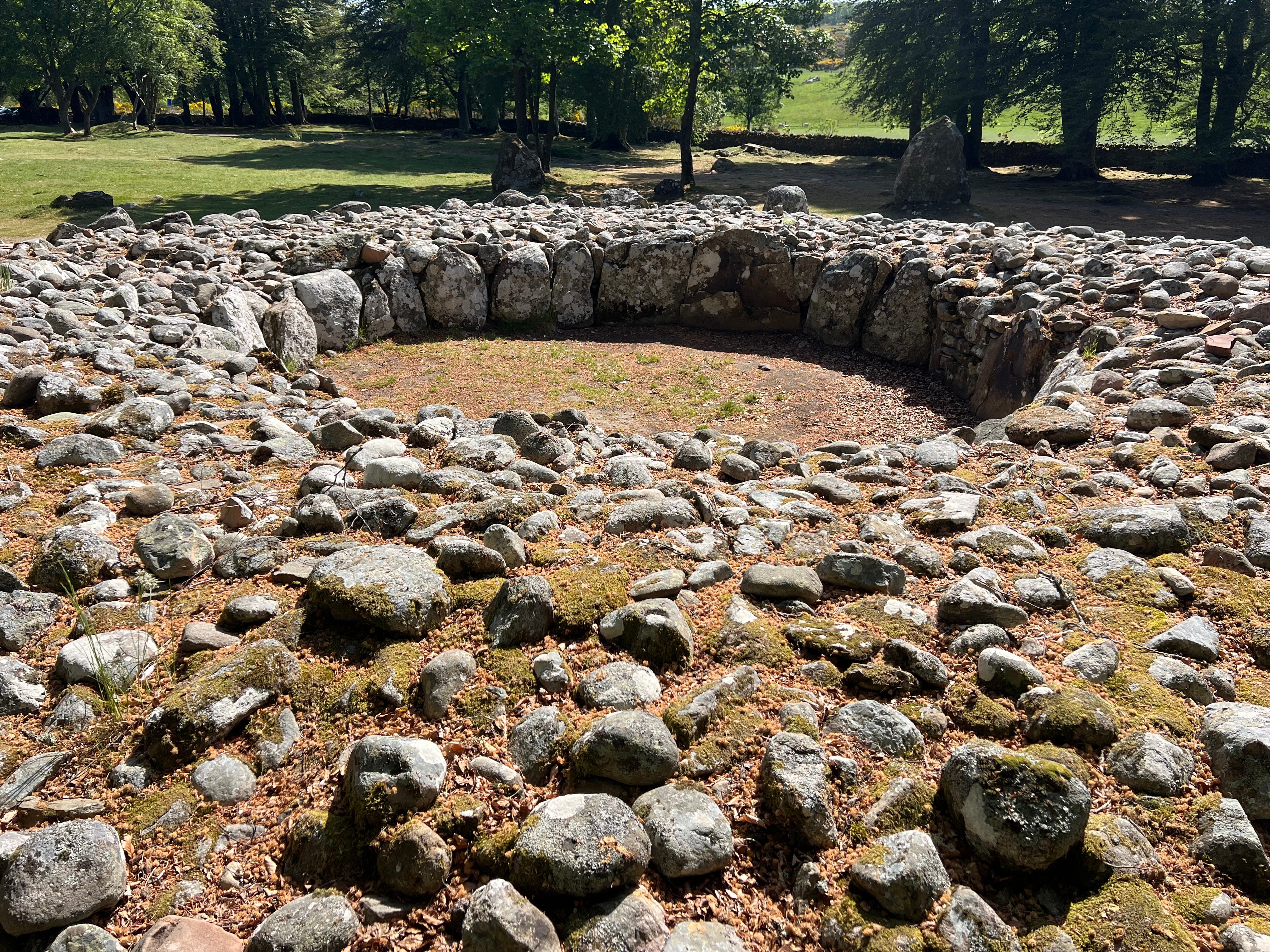
Monette and I pulled our rental car safely into a gravel parking lot after a terrifying encounter with a tour bus on a single-track road. We sat for a moment, allowing our blood to settle. Then we walked through the beech tree groves of Clava Cairns. I had arrived at the historical and spiritual homeland of Clan MacBean—the ancestral landscape my own father had traveled to more than thirty years earlier.
In fact, it was my father who had suggested we visit Clava Cairns, a 4,000-year-old Bronze Age complex near Inverness. The large stone circles and burial mounds are aligned with the winter solstice and show evidence of sacred use across generations. There were several tourist groups wandering through the site, and we consciously tried to avoid their chatter. But as we prepared to leave, a large group of men and women gathered around one tall standing stone.
They held hands in a circle. Soft music played from a portable speaker. Then they began to dance. They stepped forward and back, circling the stone, shifting toward the center, reaching upward toward the sky. We stopped and watched. Something in me recognized the movement – so simple and ancient. When they finished, we could not contain our delight and clapped softly. It seemed they were preparing to begin again, and my eagerness got the better of me. I asked if we could join. They smiled and immediately welcomed us into the circle. They spoke Portuguese. We spoke no Portuguese. It didn’t matter.
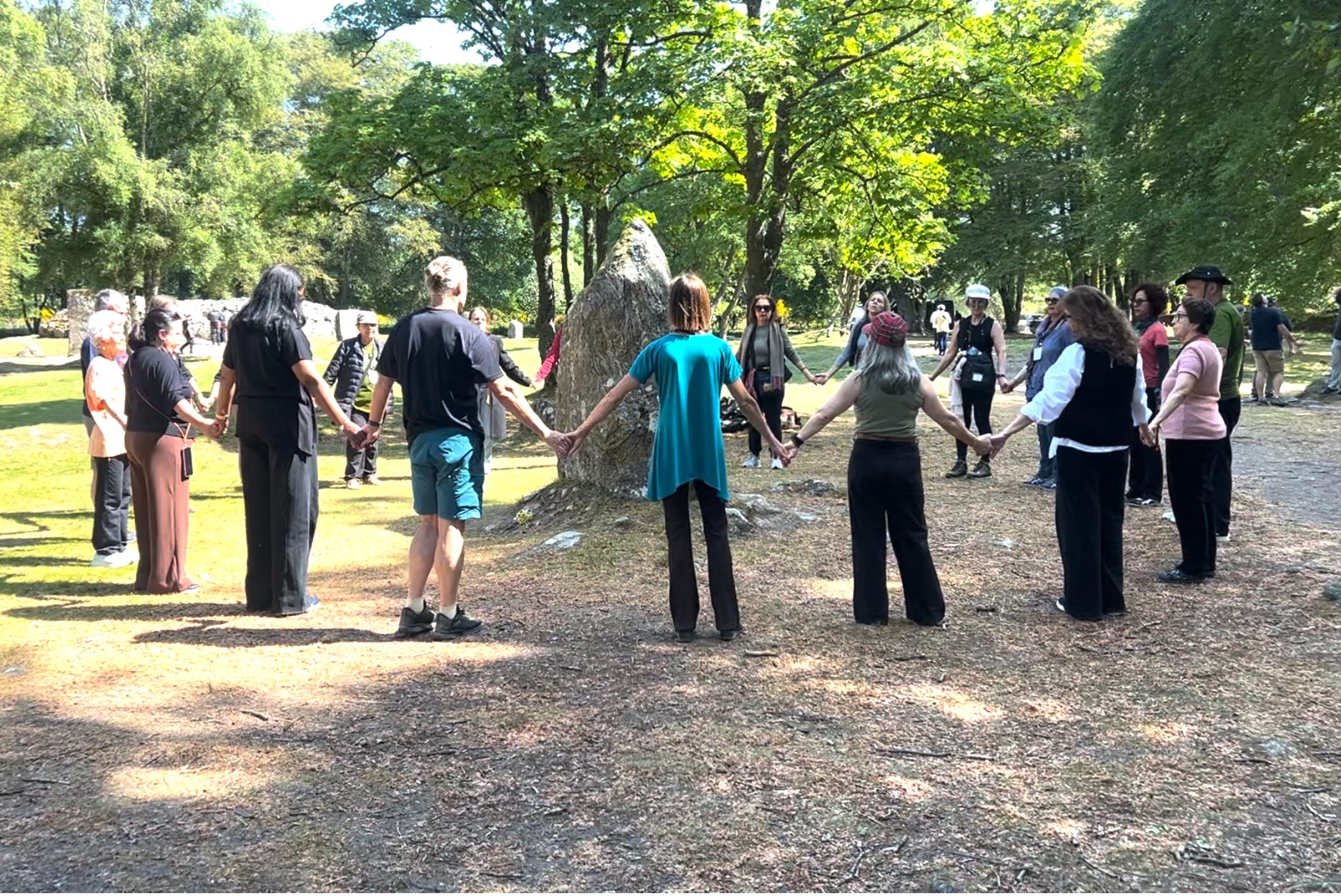
We followed the leader’s gestures as he taught us the movements, stepping together in quiet reverence for the stone, the music, the land, and each other. Holding hands with strangers, moving around an ancient marker, I felt again what the pilgrimage had shown me over and over: The sacred was not elsewhere. It was happening here.
Between bodies.
Between languages.
Between worlds.
Afterward, we exchanged hugs, smiles, and contact information. No shared vocabulary. Only the connection of our moving bodies.
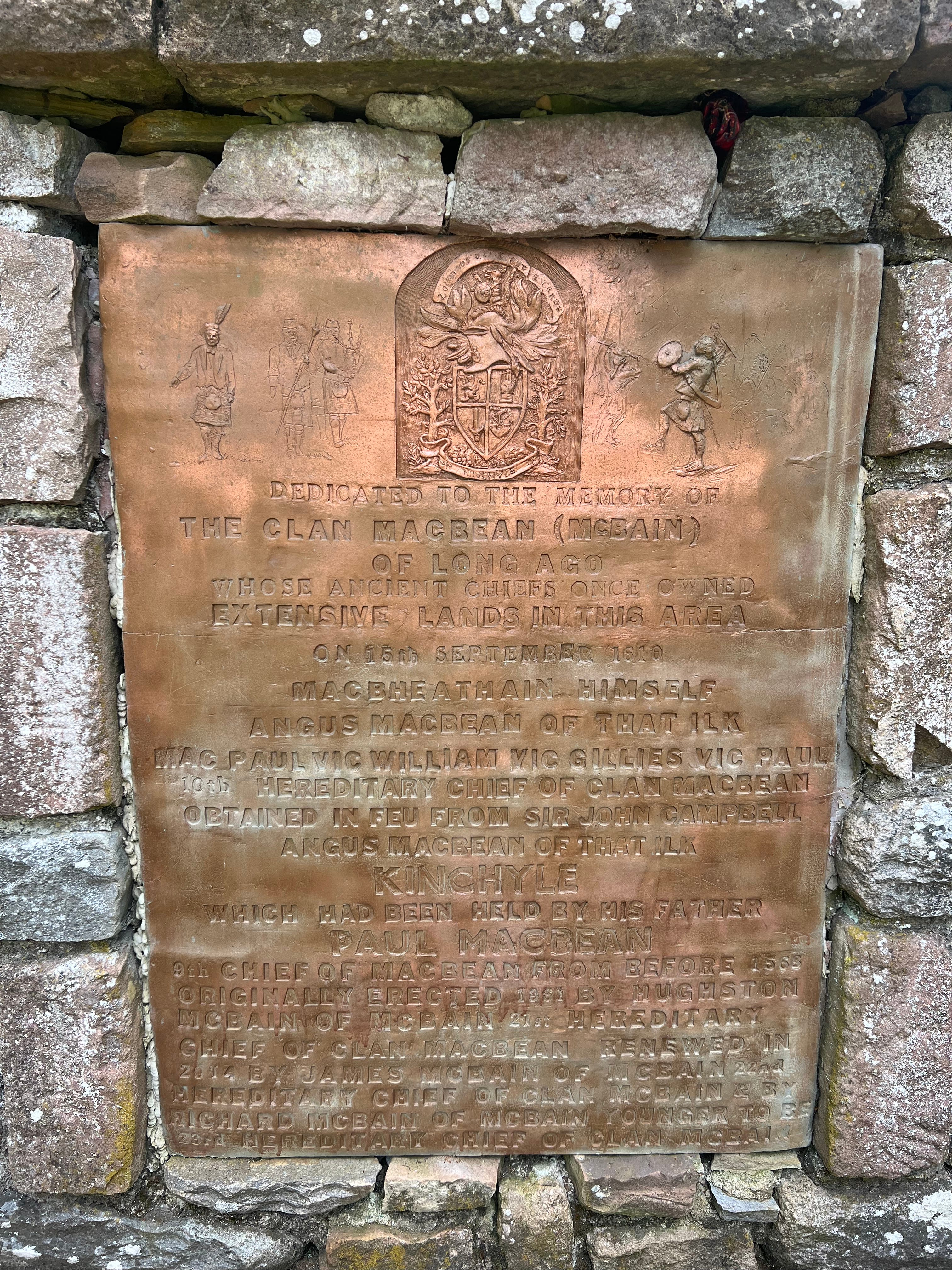
The night before, I had researched where I might find burial grounds for Clan MacBean. We had already visited the MacBean Monument, honoring the ancestral land that had belonged to the Clan in the late 1300s. Now, I wanted to find an actual MacBean ancestor whose gravestone could receive the cut red thread from my un-binding ceremony. At Dunlichity Churchyard, Monette began searching from the top of the hill while I wandered through the lower graves.
We moved slowly, reading names and dates, passing through generations of MacLeans, MacGillivrays, MacIntoshes, and MacPhails. Finally, I found them. Finlay and Margaret MacBean, with their son William, who died September 27, 1908, aged 11 years and 10 months. Standing before the family grave, I imagined them as archetypes:
Mother.
Father.
Child.
Placing a hand gently on the stone, I wondered if this was where I was meant to leave my red thread.
Then, from further up the hill, I heard Monette call out:
“I found a MacBean!”
A pause.
“But I can’t make out the first name… It looks like a J… Ja… James!”
I laughed.
A deep, immediate recognition moved through my body.
“That’s my father’s name!” I called back.
There I was. Full circle. Back to my patrilineal line.
My father is alive, but this stone represented something more expansive than this one life - all the fathers before him, all the generations of longing, protection, wounds, and survival that had traveled through our bloodline. We were survivors of each other —of ourselves.
I lit the end of the red thread and placed my right hand on the grave. I held the burning thread toward the sky and released the burdens of our lineage into the wind.
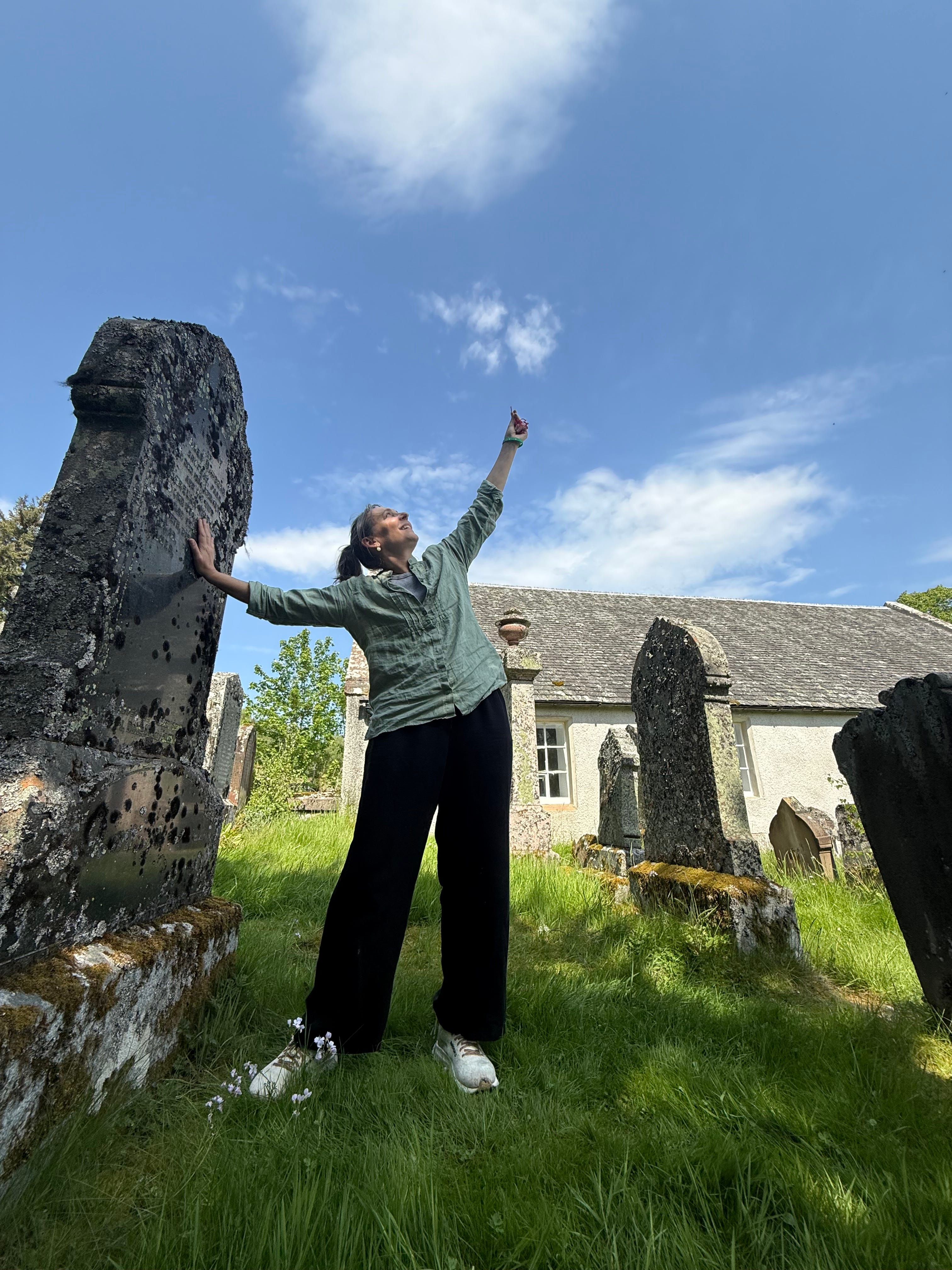
“Blessed be,” I said.
Then I wrapped the thread around the gravestone, tying a second bow beside the first bow I had tied at Brigid’s Well.
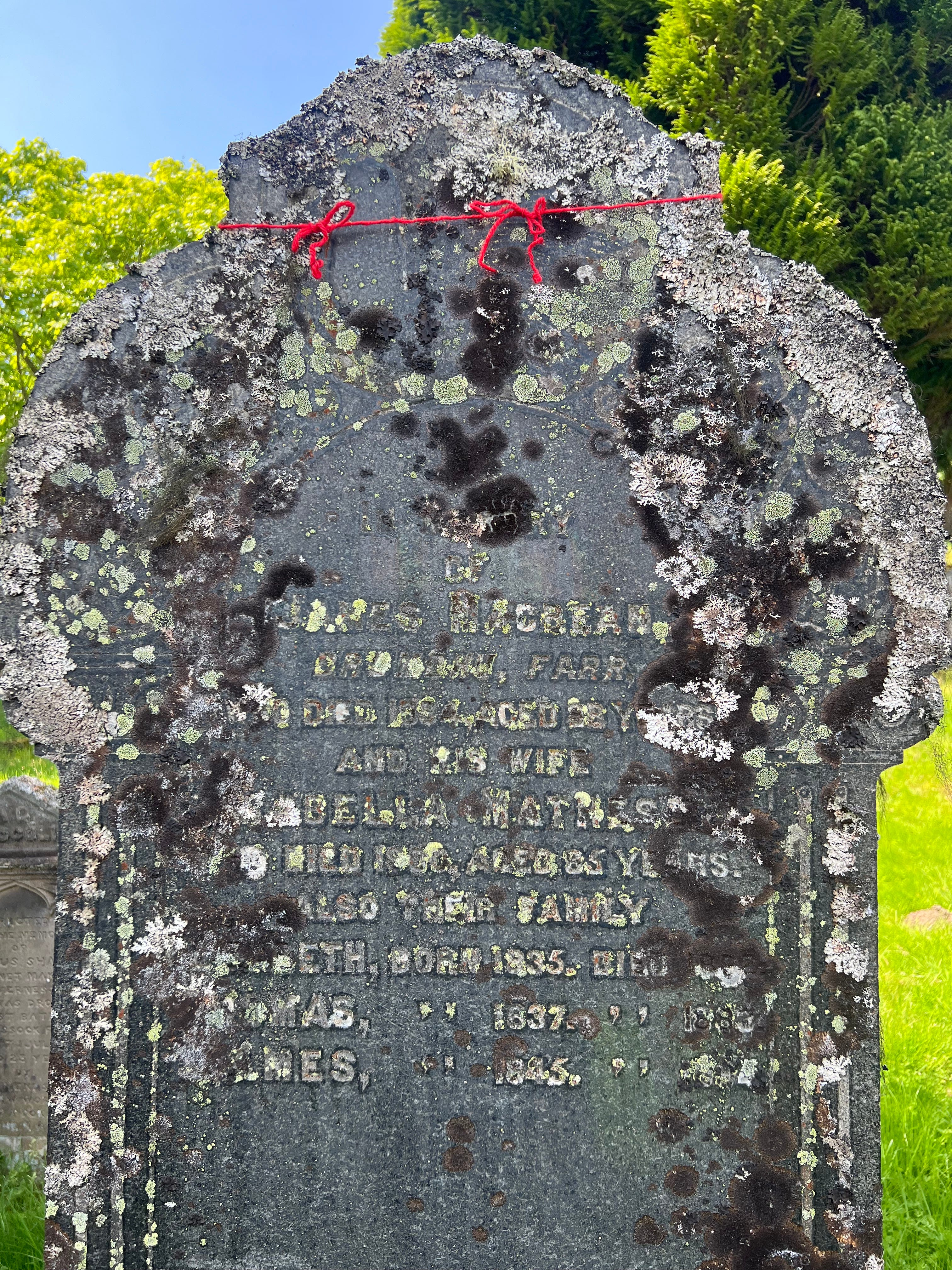
One for Father.
One for Daughter.
Released and reconnected. Not through obligation. Not through the old contracts. But through remembrance. By translating from the dead what is alive.
“. . . all the fathers before him, all the generations of longing, protection, wounds, and survival that had traveled through our bloodline. We were survivors of each other —of ourselves.
“. . . all the fathers before him, all the generations of longing, protection, wounds, and survival that had traveled through our bloodline. We were survivors of each other —of ourselves.”