
Hi Babes!
My Guest Editor letter for HerStry's Babes Who Write

Last month (February) I was invited to be the Guest Editor for HerStry’s monthly newsletter to all its Babes Who Write, of which I am one! My letter features a classic Bernadette-ism (my Mom was famous for dark & witty idioms), tips (or anti-tips) for writing, and recommended reading. So, even if you are, or are not, a Babe Who Writes, please enjoy!
“Life is tough and then you die” was a mantra that my mother used in wildly different contexts. After I bombed a math test (which I did regularly), she said it dismissively, throwing her hands up while tossing me a smirk over her shoulder. It was her way of minimizing any self-hatred but also a way to remind me that she didn’t care about my failures, only how I moved through them.
She also said the phrase with bitterness as if she were really saying, “I give and I give! And for what?” She said it with that dramatic flair many times during my months-long campaign for a stuffed Snoopy doll sporting culturally inaccurate Scottish regalia. My mother finally caved, and I must have taken that tacky costume off and on a million times. Later in life, she admitted to me, “I hated that Scottish Snoopy. It went against all my principles to buy you that trash.” But I will never regret the sublime satisfaction I got from pressing together those mini-Velcro fasteners on the back of that plaid dog-kilt.
Sometimes, she said the phrase matter-of-factly with a dead pan stare into outer space, eating her famous one-pan dinner of roasted chicken, carrots, and potatoes while sitting in front of the T.V. watching 60 Minutes. An episode would end with the big stopwatch ticking loudly on the screen, and my mother would drop it with resolve and finality, “Life is tough and then you die.” Period. End. Of. Sentence. She was a tough cookie with an ironic and metaphorical intravenous line to the celestial. Once, near the end of her life, when she knew she was dying, we were sitting in the living room on her big red couch when, apropos of nothing she said, not necessarily to me, but to the room, the air, the world, “So, what is the secret of my success? I know who I am.”
“Life is tough and then you die” feels right for this February, because life right now is tough, and people are dying. I can’t Nora Ephron my way out of this truth - as much as there is a part of me that wants to stay in bed with Meg Ryan and Rosie O’Donnell watching reruns of An Affair to Remember. In my professional and personal fight against repression and oppression, sometimes bad shit is just bad shit and it’s not healthy or appropriate to manhandle it into an affirmation or learning opportunity.
So today, Babes, I offer a new delivery of my mother’s phrase. I’m saying it with my fist in the air and a knowing smile. I’m saying it loud, but not too loud, and I’m looking straight at you. I’m saying, “Life is tough and then you die!” What I hope you hear - in my tone, stance, and welling tears - is that we must keep living, keep knowing who we are (or trying to know), and keep expressing our truth. We must keep writing - pulling the Velcro apart and interlocking it back together again - trashy Scottish Snoopy-be damned.
My writing process is that I don’t have a writing process.
I don’t have a daily journaling routine, I don’t work on one piece and finish it before starting another, I don’t settle into my desk with tea and my dog at my feet. I steal my writing time, which essentially means that in between doing all the things I have to do, I write. My stealing is very anti-Virginia Wolf as my desk is in my bedroom which I share with my husband, while my door is always open to my two teenage daughters and needy pup. Stealing feels a little naughty, which (I hope) keeps my writing pithy. When I steal, I’ve got to be quick - get in and out with stealth and agility. I’ve got to have grace and smarts and sass and be brave, maybe even cocky.
Stealing works for me because, you probably guessed it, I have ADHD, which I only became aware of at age 50. Naming and claiming the way my brain works has allowed a profound new level of compassion for myself. Now, instead of feeling like I must contort my brain into the way it’s “supposed to work” I am trying harder to maximize the plusses of how it naturally works. The best money I never spent on honing my creative process was when I stopped trying to mold myself into what I thought the writer archetype was and allowed myself to embody my own writer archetype. And this writer is robbing the patriarchy of “supposed to” like a Victorian ghost who just realized she can haunt the library without a male escort. Freedom! You know yourself best, Babe. Write your way.
10 Writing Tips or Anti-Writing Tips depending on what you need in the moment:
I taught dance and choreography for 20 years before becoming a somatic psychotherapist and focusing on writing. Below are the tips I gave my choreography students on best practices for dance-making, which I have adapted for writing. I probably could have kept the word dance, and not replaced it with writing, because writing is a kind of dance, isn’t it? (Psst! #1 is the most important.)
1. Start before you’re ready.
2. The work of writing is the thing.
3. Don’t take yourself seriously. Take the work seriously.
4. Listen to the writing and be of service to the writing. Ask the writing, What do you want? What do you need?
5. Don’t be a slave to form. Allow tangents, interruptions, disruptions, distractions, new train of thought, absurdity, digressions, and side convos - because that’s how life really is.
6. If you “go there,” the reader will “go there”.
7. You get to define what you do and what it means to you.
8. It should always matter whether you write “left” or “right”.
9. If you keep at it, things happen.
10. There is only the work, and the work matters.
Recommended reading:
Dancing in the Flames - the Dark Goddess in the Transformation of Consciousness by Jungian psychoanalysts and best friends, Marion Woodman and Elinor Dickson. This book, published in 1997, could be a manifesto for our current times. It pulls patriarchal forces together and throws their projections right back to reveal oppressive structures based on fear of feminine embodiment. Their theory of metaphor as healing transformed how I approach both my professional and creative work. Radical and inspiring!
Currently reading:
Mythica – a new history of Homer’s world, through the women written out of it by Emily Hauser. I’m obsessed with re-tellings of ancient Greek myths from the point of view of women - think Madeline Miller’s Circe, and Jennifer Saint’s Ariadne. Mythica was an instant Times bestseller and it proves to go the next mile by interweaving evidence from original texts, recent archeological finds, and the historical connections (or lack thereof) between Homer’s myths and real-life women from the ancient world. Women writing women back into HerStry is always a good thing, right, Babes?
Links to three published works:
Tough Sh!t – the angry woman’s guide to embodying change
Banishing the Anger that Banished Me
Links to social media and website:
www.synergysomaticpsychotherapy.com
Substack: @writebig
Instagram: @synergysomatics
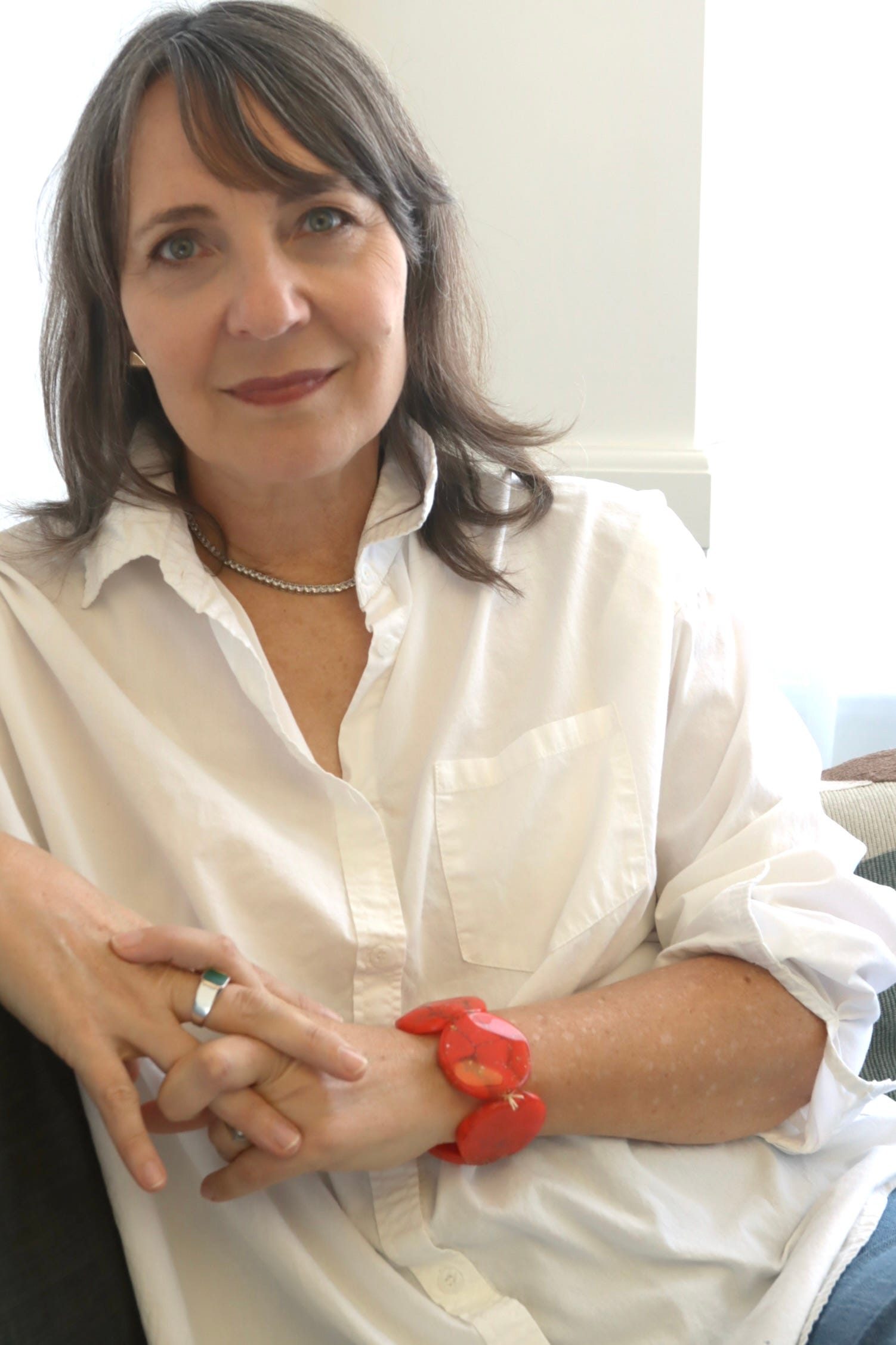
Bio: Arianne MacBean is a writer, educator, and licensed marriage family therapist and somatic psychotherapist at Synergy Somatic Psychotherapy in Pasadena, CA. She holds a BA in Dance from UCLA, a Double MFA in Choreography & Writing from California Institute of the Arts, and an MA in Counseling Psychology from Pacifica Graduate Institute with a Certificate in Somatic Psychotherapies and Practices from Antioch University. Her first book, Tough Sh!t - the angry woman’s guide to embodying change was recently published by Tehom Center Publishing celebrating feminist, queer, and BIPOC authors and is available everywhere books are sold. Her essays have been published by Mutha Magazine, Feminism and Religion, Nasty Women Writers Project, and the academic journal, Dance Chronicle. She was a finalist with Honorable Mention in the Women on Writing 2026 Creative Non-Fiction Contest. You can find more of her writing on Substack @writebig.